orbit.
A project board and client-approval portal for creative studios, where the invoice follows the sign-off. A personal build.
DevelopmentUI Design
- Role
- Design & full-stack development
- Type
- Personal project
- Stack
- Next.js 16, React 19, TypeScript, Payload 3, PostgreSQL
- Timeline
- 2026
Summary
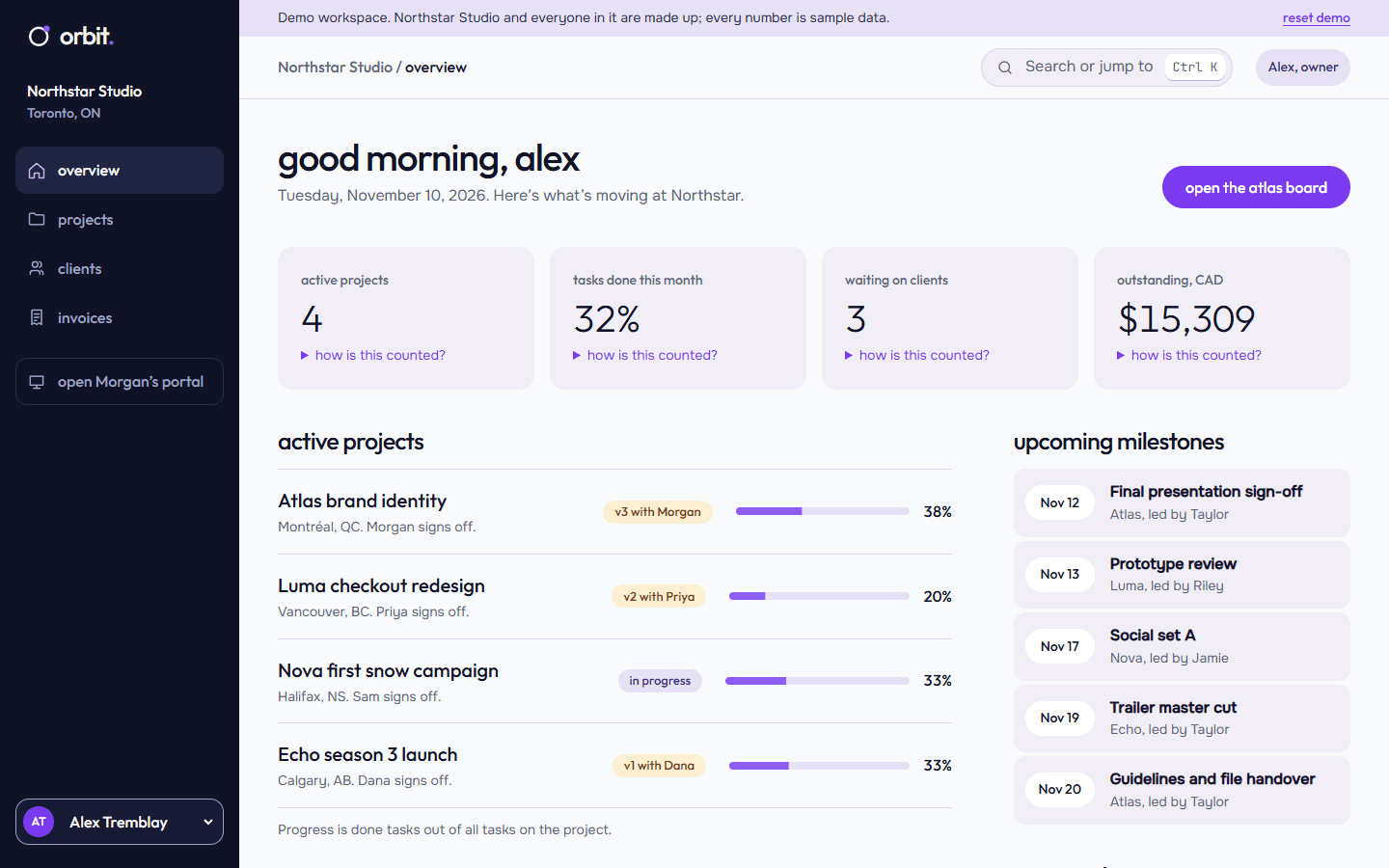
orbit. is a personal project, not a real company. I built it to show what I can do with the tools behind it: a workspace for creative studios where the team works on a board, clients approve in their own portal, and the invoice follows. The demo world is a made-up Toronto studio, Northstar, with clients in Montréal, Vancouver, Halifax and Calgary. All of it is sample data.
Live site
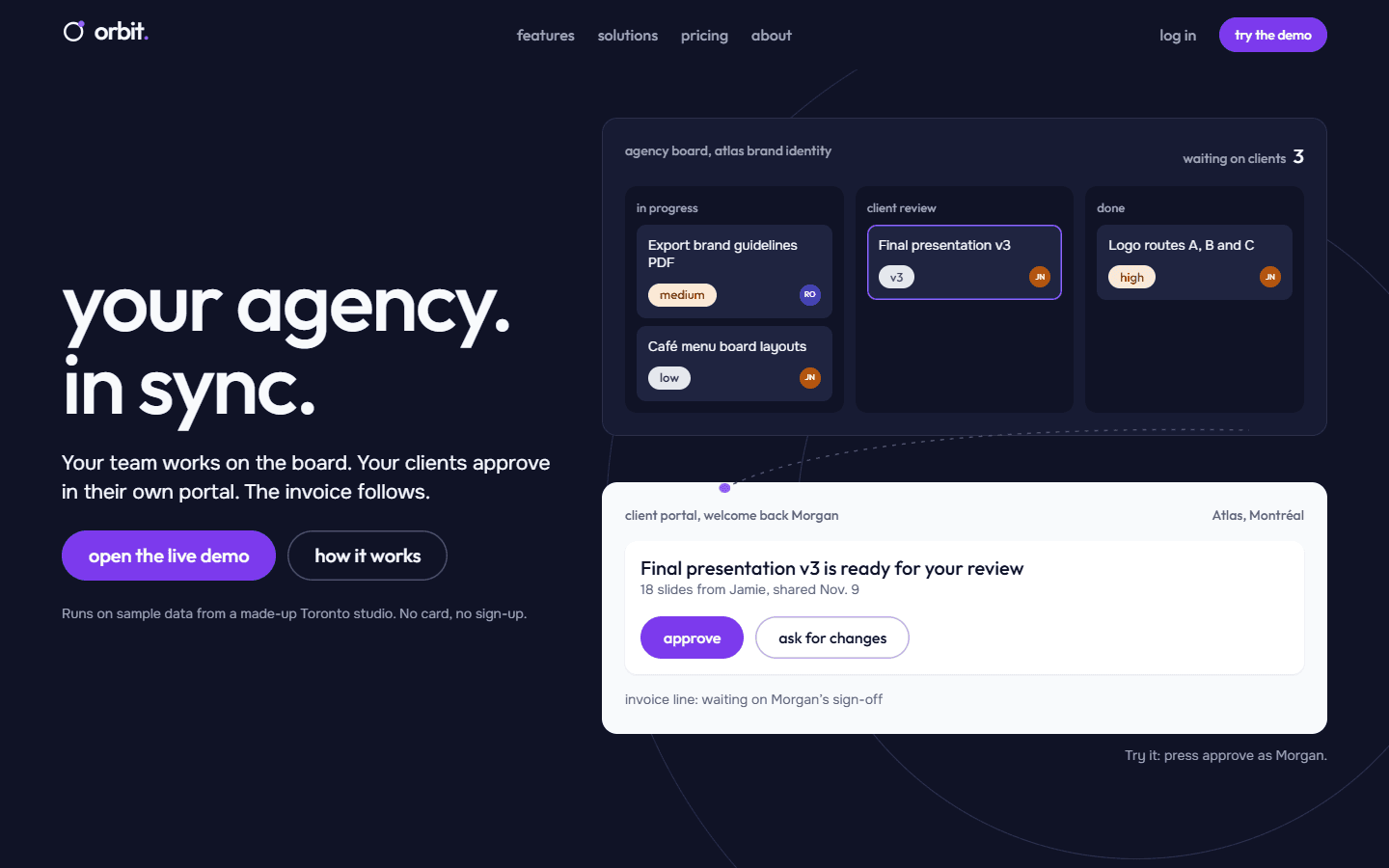
The real app. Press approve as Morgan on the home page, open the Atlas board and try to drag a card to done before the client signs off, or switch people in the sidebar to see what each one is allowed to do. Northstar Studio and everyone in it are made up; every number is sample data.
orbit.samuelrolandvroom.comScreens
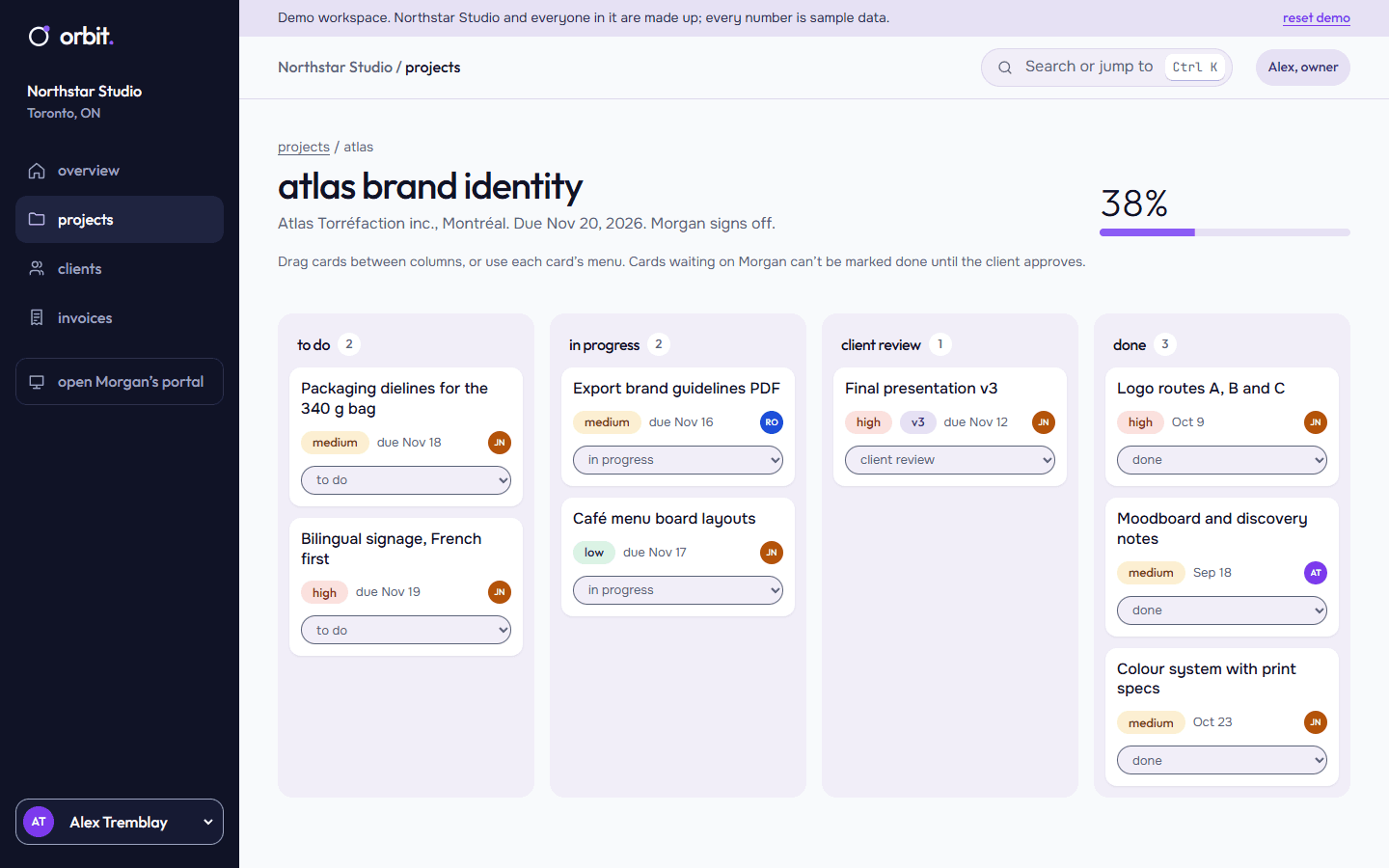
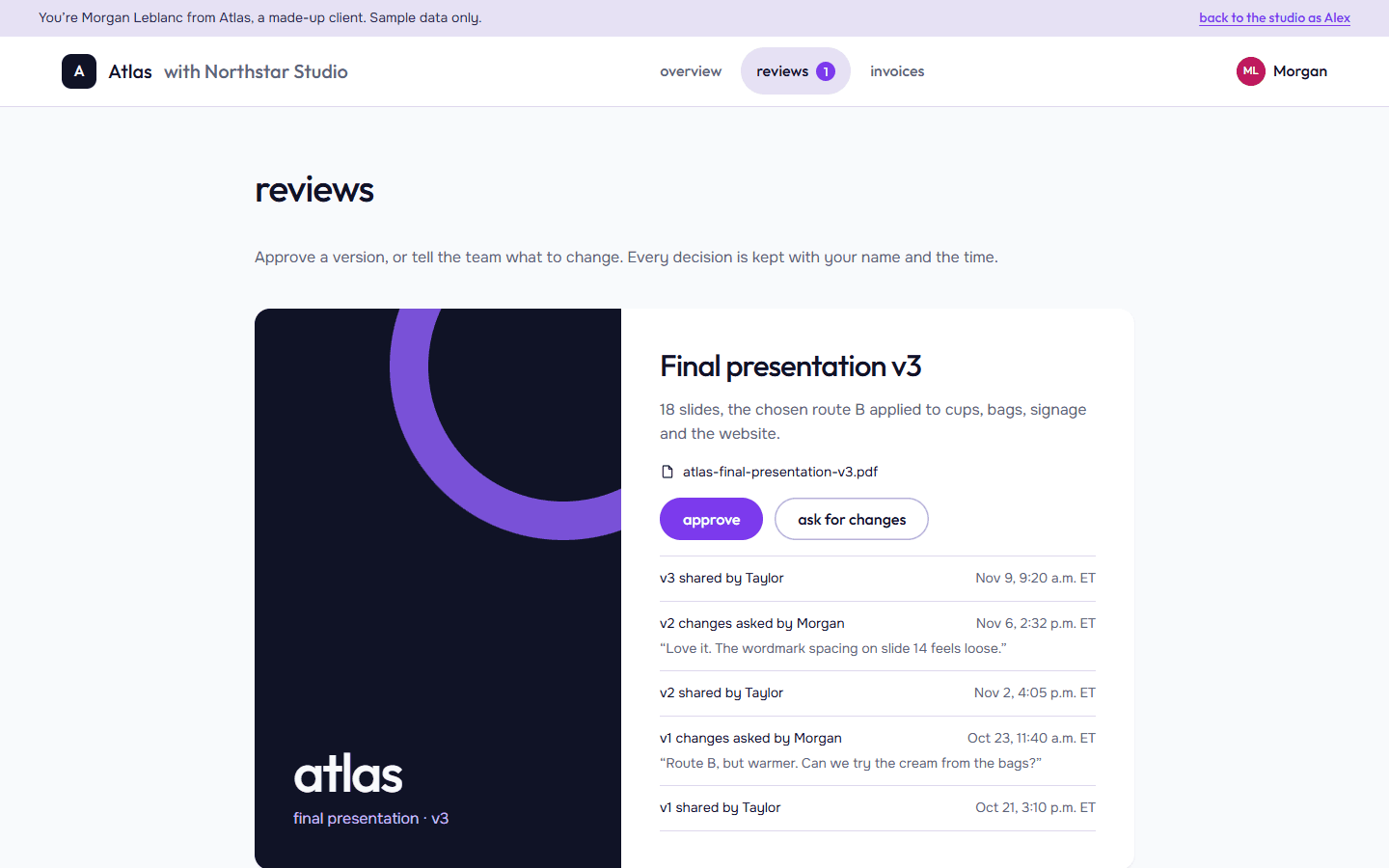
Screenshots of the running site. Every name and number in them is demo data.
One record, one reducer
The rules live in one reducer with no React, so the browser and the server import the same code. The browser applies an action at once; the server then runs the same action as the signed-in person, loads the record from Postgres, checks it, and writes back only the documents that changed. Its answer replaces the browser's copy, and a refusal shows as a toast with the saved version restored.
The board, the portal and the server all have to agree on what just happened.
Rules on the server
A card waiting on the client can't be dragged to done until they approve. Only the owner sends invoices or marks them paid, members can't approve, clients act only on their own projects, and a change request needs a note. Clients read only their own projects, only comments shared with them, and never draft invoices, and that filter runs on the server, not just in the portal's UI.
Canadian invoicing
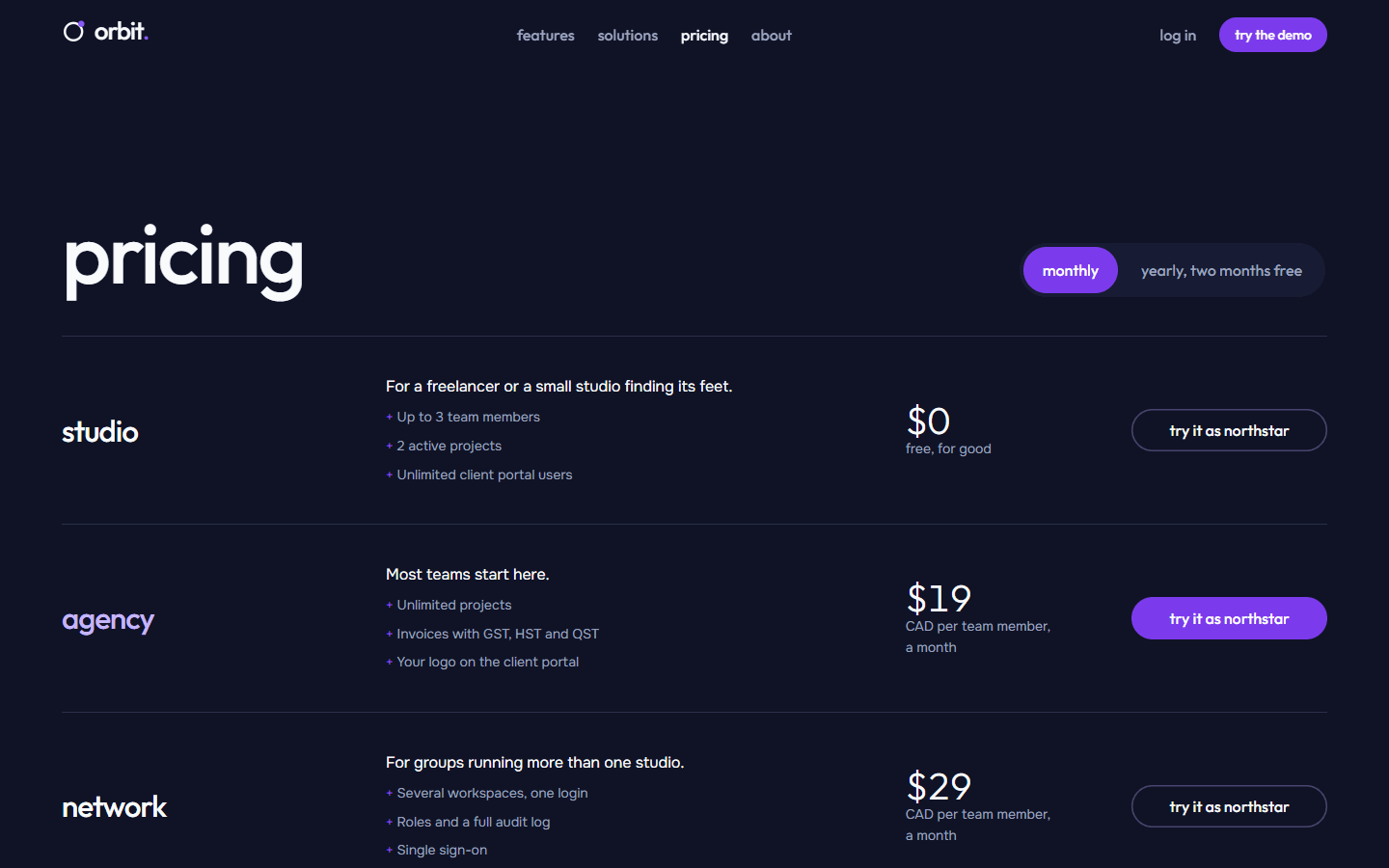
Prices and invoices are in CAD, formatted en-CA. Sales tax follows the client's province: HST in Ontario and the Atlantic provinces, GST and QST in Quebec, GST elsewhere, in integer cents with each tax rounded on its own and a check script for the maths. Invoices carry a GST/HST number, net 15 or 30 terms and payment by Interac e-Transfer or EFT.
Motion & access
Plain CSS with design tokens and no UI or state libraries. Scroll reveals, parallax, a count-up and an approval dot on a CSS offset-path, all on transform or opacity and off under reduced motion. Every control has a focus ring, each card has a move menu as a keyboard alternative to drag, and the drawer and command palette use native dialog.